Book #5 – Mindset

Mindset

I chose this fifth book of the 50 I am aiming to read in 2013 upon the recommendation of the Heath brothers in their book Switch (also highly recommended). Given the props from Chip and Dan, as well as Guy Kawasaki and others on the cover, I had high expectations related to the content. Carol Dweck does not disappoint. I find myself checking my language to ensure it falls within the growth mindset and not the fixed. It is a near obsession.

In short, how we think and speak represents whether we believe things can only improve or we are destined and limited by how we are. Here’s a hint: the former allows ordinary people to do extraordinary things. The latter causes extraordinary people to crash and burn.

The lessons from this book can apply to business, sports, relationships and your own personal development. And even if only one of these really apply to you, there is much to learn from the anecdotes and context contained within.

I can only echo the Heaths in saying, “Everyone should own this book.” Get it. Read it. Now.

It is recommended to be read with The Power of Habit, which I also read as part of my 50 books in 2013

Book the Fourth of 50

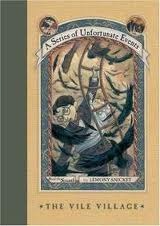
The_vile_village

Technically, it is Book the Seventh – The Vile Village, since the fourth book I have read this year is the seventh book in the Series of Unfortunate Events. I warned that there would be some brain candy. The real reason I read this is because my 11-year-old asked me to read the series, which I am doing between other books.

The things we do for our kids.

It’s Lemony Snicket, with a formulaic storyline. It’s occasionally fun. And it’s repetitive. But it’s also important to my daughter to read the series. So, here I am.

The Two Sides of a Promotion

Congratulations! You’ve just received a promotion. With it comes new responsibilities, possibly a new role, and (hopefully) a raise. Oh, and by the way, you’ve also inherited all the bad decisions, mistakes and failures to act of your predecessors. and you have to fix them now.

This is the reality of accepting the challenge.

As the leaders of the organization, it is vital that we communicate this expectation to those we promote, support them through the needed improvements and demonstrate the appropriate amount of patience through this change.

We have to get this right, if we want to be successful.

Tagged , ,

Third of 50

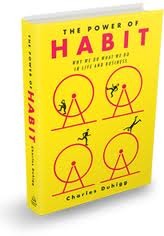
Poewr_of_habit

The third book I read this year in my quest for reading 50 books in 2013 came to me through a new acquaintance.

When I received the The Power of Habit, I knew it was gaining in popularity. My initial thought was that it was popular because executives just felt they had to read it. I did expect, though, that there would be a few anecdotes that would make reading the book worth it.

I was pleasantly surprised to learn that this was not written by some business person with something to prove and instead was written by a journalist adept at narration. the author, Charles Duhigg, did a nice job of weaving various stories together to illustrate his points.

After reading it, I must say I have a new appreciation for Starbucks (the company, not the coffee) as well as Alcoa and its one-time CEO Paul O’Neill.

I recommend reading this alongside Malcom Gladwell’s Outliers.

Tagged ,

Be Honest

A couple of days ago, moments after the person viewed my profile on LinkedIn (I got the notification), I received an email that said:

Hi Chris,

I was trying to reach you over the phone but couldn’t connect. Could we catch up for a quick five minutes chat  today/tomorrow? Appreciate your time.

There was no call (I checked). There was no voicemail.

To be clear: you do not attempt to initiate a relationship built on trust by lying to get in the door. I can’t imagine how anyone thought this was successful sales tactic. For those sales targets where this might work, I would question whether they had the basic intelligence to even understand what they were being sold. maybe that’s the point.

For the rest of you that rely on having a worthwhile reputation in your sales efforts, all I can say is, be honest. If you want to reach someone via email, then be brilliant in that email. If you’re going to call, make the conversation worth it. Whatever your sales preference, execute on it with excellence. but whatever you do, don’t lie.

#2 of 50 in 2013

Shadow_account

I went the fiction route for second of 50 books in 2013, opting for Shadow Account by Stephen Frey. I had previously read his debut novel The Takeover. Frey’s storytelling has improved quite a bit since his debut, yet it still requires a fair amount of suspended belief. I’m a sucker for thrillers, and this one didn’t disappoint, with its various plot twists and semi-complicated characters.

If you’re in the mood for a corporate thriller to entertain you, give this or one of his other novels a shot.

#1 of 50 in 2013

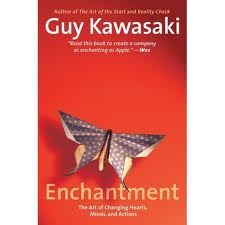
Enchantment

This first book I read this year as part of my goal of reading 50 books in 2013, is Guy Kawasaki’s Enchantment. I had the pleasure of seeing him, among many other fantastic speakers, at the 2012 Inc. 500|5000 Conference. He is a brilliant presenter and does a masterful job of getting to the point and making it in a clear manner. His writing is no different. There are several key takeaways that everone can begin to employ immediately. Some are simple, such as the proper way to shake hands or present a genuine smile. Others will take much more work, such providing a MAP (mastery, autonomy and purpose) for your employees.

I highly recommend reading this alongside Simon Sinek’s Start with Why and the Heath brothers’ Switch.

Quick Check on Strategy – Execution Alignment

NOTE: If your mission statement contains the cliche “maximize shareholder value,” you might want to go ahead and skip this one. This is intended for those organizations who want to make a difference in the people they serve. While maximizing shareholder value is important to shareholders, it doesn’t mean squat to you customers–it might even tick them off.

You have your mission. What it is your ogranization does and why you do it. You live your mission every day and it shows in everything you do. Or does it?

Our mission is our guiding light. It gives us direction and a way to check oursleves to ensure we are still on task. From our mission, we develop our strategues–both short- and long-term. And then we get to execution. This is usually when the trouble starts.

Look at what you are doing each day and the decisions you are making. Do they align with your strategy and mission? Every decision matters. Everything you choose to do or not do makes a difference and either propels you to achieving your mission or inhibits your success. 

The choice is yours.

Tagged , ,

50 Books in 2013

I have set an audacious goal (for me) of reading 50 books in 2013. This will be a combination of fiction and non-fiction, as well as the occasional brain candy. I will share the books and some key takeaways in this blog. I’m also looking for suggestions of other books that I might enjoy.

Anyone else up for the challenge?

Cost of healthcare?

Is anyone aware of studies that show the role HR turnover has in the rising cost of healthcare? I recently heard a story on the radio discussing coding inflation at hospitals. It seemed that the conclusion was that this coding inflation was happening because of upward revenue pressure at the hospitals and downward revenue pressure from insurance companies and the government. To me, though, it seems like the inflation may likely be driven more by the hospitals own costs.

Separately, I was party to a conversation between two nurses who were discussing their respective experiences working in hospitals. One point in particular struck me–it was the amount of turnover that occurred, particularly nurses. Sometimes it was across the various units and other times it was isolated to one particular unit. Regardless, the cost of turnover is well documented yet often difficult to pull out of the financials.

I’m curious to see what role turnover at hospitals has on the overall impact on the cost of health care (not to mention the delivery). I’d like to study this impact and propose solutions based on the findings and my own experience. What we learn won’t be isolated to health care, but it is a great place to start.

If anyone is interested in collaborating on this, please message me directly.