Category Archives: Improvement

Change Your Process to Find Better Candidates

The-Right-CandidateAfter reading a couple of blogs from the Harvard Business Review Blog Network–“Don’t Hire the Perfect Candidate” and “Why Employers Aren’t Filling Their Open Jobs”–it’s apparent that the recruiting process is broken…and not just for the reasons mentioned in these posts. The problem starts with our love of lists: grocery lists, to do lists, wishlists, top 10 lists, you name it. Companies and recruiters tend to believe they can apply this list mentality to finding the best people for a given role. So what do they do? They create a list of everything “the successful candidate” must have. There are two major reasons why this doesn’t work.

  1. It ends up wasting a lot of people’s time.
  2. It forces people to be lazy about assessing candidates.

Time gets wasted in numerous ways: people trying to figure out if they check enough boxes to get in the door; job seekers stretching the truth about their experience, hoping for that interview; recruiters and hiring managers discussing or interviewing candidates who don’t really meet the list criteria; and on and on. It’s a mess.

When the recruiter or hiring manager has this massive list of credentials, that’s exactly what they use to determine how viable a candidate is. It’s not efficient; it’s lazy. Worse, they are likely missing out on exceptional candidates because they don’t have the exact experience or pedigree enumerated in the job posting. Remember that the leaders of Enron and most of the recruits to the investment companies and mortgage houses that led the way to the recession also checked a lot of boxes on a lot of job posts. Look where that got them.

Just because people match the list it does not mean they will have automatic success in the role. How do they contribute to culture? How do they respond to certain situations?

Both authors of the HBR blog posts recommend a mix of investing more in recruitment and retention, reassessing the market and lowering expectations. While there may be validity to those, I would start with a much simpler premise–ditch the list. Instead, create a profile that matches the individual with the role. Doing so successfully really requires three things:

  • A brief narrative (about 100 words) about the characteristics valued in the person
  • The strategic intent of the role (no more than three bullets; more than that and you’re getting too tactical)
  • What a typical day in the life looks like

This is a challenging process, no doubt, and takes time to get it right. But the beauty of it is that it forces you to truly think about how the role contributes to the overall success of the organization and the kind of person who will be the best fit.

More qualified candidates will apply. You will review their cover letters and resumes differently. Your interviewing process will change as well. Most importantly, you will do a much better job of bringing real talent into your organization, not just a bunch of box checkers. And the organization will, in turn, be even more successful.
Tagged , ,

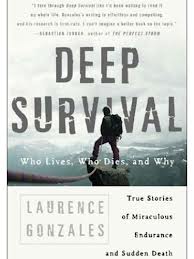
Book #9 – Deep Survival

Deep SurvivalMy former CEO (who is now serving as Chairman of our board) recommended Laurence Gonzales’s Deep Survival a couple of years ago. He may have even purchased it for me. It, like so many others, has been sitting on my nightstand for far too long. This quest to read 50 books in 2013 forced me to finally read it. I wish I had picked it up sooner. There is so much to learn and understand from the stories of survival, intermingled with the psychology that makes survival possible in the first place.

I was blown away.

In short, we must first acknowledge and accept that we will all die at some point. For us to survive extreme situations, regardless of what that situation may be–being lost in the wilderness, having a broken limb while stranded on a mountain, or steering a business through a terrible economy–we must first be prepared for the worst, second have the right frame of mind to put that preparation to use and third encounter enough luck to actually make it out alive.

One of my favorite quotes from the book is one he took from the philosopher Epictetus, in which he wrote, “On occasion of every accident (event) that befalls you remember to turn to yourself and inquire what power you have for turning it to use.” In other words, take what the universe gives you and find a way to make it work for you. Own your situation and use everything you know to turn what may appear to be a death knell into your greatest triumph.

With that said, even the best prepared individuals who have the perfect mindset encounter the worst luck and fail to survive. At the same time, those unfortunate souls are the most alive because they prepared, took the chances and put themselves in the best possible position to survive. I must applaud and emulate them.

There is so much to learn from this well-written compilation of more than 35 years of research. At a minimum, read it for the stories alone. You just might get more out of it.

I recommend reading this with Malcolm Gladwell’s Blink and Mindset by Carol Dweck.

Tagged , , ,

Showing Real Gratitude

Thank you

Late last week, I read this story on FastCompany.com discussing how America’s happiest companies also tend to make the most money. Then, this morning, I read this piece, also from FastCompany.com, titled “For Happier Employees, Learn to Give More Gratitude Than ‘Thx'”. I have been working over the last several years to improve in my ability to show gratitude for my co-workers and those for whose success I am responsible. More recently, I have been putting even more effort into this, showing gratitude on a daily basis.

The equation is actually quite simple: happy employees = happy customers. Harvard Professor Francis Frei has done some remarkable research and teaching in this area, a fair bit of it documented in her book Uncommon Service, co-authored with Anne Morriss. Companies such as Zappos, Rackspace and Southwest Airlines, among others, succeed because they are able to deliver a much higher level of service than most of their competitors, doing so with much higher employee satisfaction rates.

Showing real gratitude is harder than it seems. We, as humans, leaders, managers, seemed to be programmed to seek and identify the negative. We can react to what’s wrong and fix it. Many who have a knack for problem-solving actually thrive on this. Others just don’t know any better.

Instead, we must pay much more attention to what is going on around us, with our teams and with our teams’ teams. Then, we need to identify something good that has happened–managing a situation, a demonstration of character, helping someone else improve performance–and specifically note it to the individual. Give examples whenever possible.

Your best option is to hand-write a note. It is intimate, far more meaningful and most likely to be kept if not displayed.

The point of this, though, is not to show gratitude in the hopes it will lead to greater profits. If that is your motivation, then the insincerity will shine through. For it to be meaningful, you have to actually mean it. You show the gratitude because it is deserved and helps reinforce the behaviors and activities that will make that person and your organization successful. Showing real gratitude is more about developing the individual. The rest is a nice addition.

Tagged , , ,

Book #5 – Mindset

Mindset

I chose this fifth book of the 50 I am aiming to read in 2013 upon the recommendation of the Heath brothers in their book Switch (also highly recommended). Given the props from Chip and Dan, as well as Guy Kawasaki and others on the cover, I had high expectations related to the content. Carol Dweck does not disappoint. I find myself checking my language to ensure it falls within the growth mindset and not the fixed. It is a near obsession.

In short, how we think and speak represents whether we believe things can only improve or we are destined and limited by how we are. Here’s a hint: the former allows ordinary people to do extraordinary things. The latter causes extraordinary people to crash and burn.

The lessons from this book can apply to business, sports, relationships and your own personal development. And even if only one of these really apply to you, there is much to learn from the anecdotes and context contained within.

I can only echo the Heaths in saying, “Everyone should own this book.” Get it. Read it. Now.

It is recommended to be read with The Power of Habit, which I also read as part of my 50 books in 2013

The Two Sides of a Promotion

Congratulations! You’ve just received a promotion. With it comes new responsibilities, possibly a new role, and (hopefully) a raise. Oh, and by the way, you’ve also inherited all the bad decisions, mistakes and failures to act of your predecessors. and you have to fix them now.

This is the reality of accepting the challenge.

As the leaders of the organization, it is vital that we communicate this expectation to those we promote, support them through the needed improvements and demonstrate the appropriate amount of patience through this change.

We have to get this right, if we want to be successful.

Tagged , ,

Third of 50

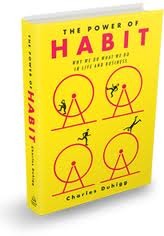
Poewr_of_habit

The third book I read this year in my quest for reading 50 books in 2013 came to me through a new acquaintance.

When I received the The Power of Habit, I knew it was gaining in popularity. My initial thought was that it was popular because executives just felt they had to read it. I did expect, though, that there would be a few anecdotes that would make reading the book worth it.

I was pleasantly surprised to learn that this was not written by some business person with something to prove and instead was written by a journalist adept at narration. the author, Charles Duhigg, did a nice job of weaving various stories together to illustrate his points.

After reading it, I must say I have a new appreciation for Starbucks (the company, not the coffee) as well as Alcoa and its one-time CEO Paul O’Neill.

I recommend reading this alongside Malcom Gladwell’s Outliers.

Tagged ,

Be Honest

A couple of days ago, moments after the person viewed my profile on LinkedIn (I got the notification), I received an email that said:

Hi Chris,

I was trying to reach you over the phone but couldn’t connect. Could we catch up for a quick five minutes chat  today/tomorrow? Appreciate your time.

There was no call (I checked). There was no voicemail.

To be clear: you do not attempt to initiate a relationship built on trust by lying to get in the door. I can’t imagine how anyone thought this was successful sales tactic. For those sales targets where this might work, I would question whether they had the basic intelligence to even understand what they were being sold. maybe that’s the point.

For the rest of you that rely on having a worthwhile reputation in your sales efforts, all I can say is, be honest. If you want to reach someone via email, then be brilliant in that email. If you’re going to call, make the conversation worth it. Whatever your sales preference, execute on it with excellence. but whatever you do, don’t lie.

#1 of 50 in 2013

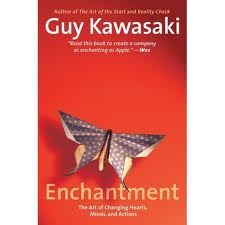
Enchantment

This first book I read this year as part of my goal of reading 50 books in 2013, is Guy Kawasaki’s Enchantment. I had the pleasure of seeing him, among many other fantastic speakers, at the 2012 Inc. 500|5000 Conference. He is a brilliant presenter and does a masterful job of getting to the point and making it in a clear manner. His writing is no different. There are several key takeaways that everone can begin to employ immediately. Some are simple, such as the proper way to shake hands or present a genuine smile. Others will take much more work, such providing a MAP (mastery, autonomy and purpose) for your employees.

I highly recommend reading this alongside Simon Sinek’s Start with Why and the Heath brothers’ Switch.

Quick Check on Strategy – Execution Alignment

NOTE: If your mission statement contains the cliche “maximize shareholder value,” you might want to go ahead and skip this one. This is intended for those organizations who want to make a difference in the people they serve. While maximizing shareholder value is important to shareholders, it doesn’t mean squat to you customers–it might even tick them off.

You have your mission. What it is your ogranization does and why you do it. You live your mission every day and it shows in everything you do. Or does it?

Our mission is our guiding light. It gives us direction and a way to check oursleves to ensure we are still on task. From our mission, we develop our strategues–both short- and long-term. And then we get to execution. This is usually when the trouble starts.

Look at what you are doing each day and the decisions you are making. Do they align with your strategy and mission? Every decision matters. Everything you choose to do or not do makes a difference and either propels you to achieving your mission or inhibits your success. 

The choice is yours.

Tagged , ,

50 Books in 2013

I have set an audacious goal (for me) of reading 50 books in 2013. This will be a combination of fiction and non-fiction, as well as the occasional brain candy. I will share the books and some key takeaways in this blog. I’m also looking for suggestions of other books that I might enjoy.

Anyone else up for the challenge?