Monthly Archives: February 2013

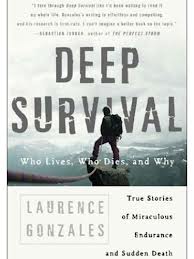
Book #9 – Deep Survival

Deep SurvivalMy former CEO (who is now serving as Chairman of our board) recommended Laurence Gonzales’s Deep Survival a couple of years ago. He may have even purchased it for me. It, like so many others, has been sitting on my nightstand for far too long. This quest to read 50 books in 2013 forced me to finally read it. I wish I had picked it up sooner. There is so much to learn and understand from the stories of survival, intermingled with the psychology that makes survival possible in the first place.

I was blown away.

In short, we must first acknowledge and accept that we will all die at some point. For us to survive extreme situations, regardless of what that situation may be–being lost in the wilderness, having a broken limb while stranded on a mountain, or steering a business through a terrible economy–we must first be prepared for the worst, second have the right frame of mind to put that preparation to use and third encounter enough luck to actually make it out alive.

One of my favorite quotes from the book is one he took from the philosopher Epictetus, in which he wrote, “On occasion of every accident (event) that befalls you remember to turn to yourself and inquire what power you have for turning it to use.” In other words, take what the universe gives you and find a way to make it work for you. Own your situation and use everything you know to turn what may appear to be a death knell into your greatest triumph.

With that said, even the best prepared individuals who have the perfect mindset encounter the worst luck and fail to survive. At the same time, those unfortunate souls are the most alive because they prepared, took the chances and put themselves in the best possible position to survive. I must applaud and emulate them.

There is so much to learn from this well-written compilation of more than 35 years of research. At a minimum, read it for the stories alone. You just might get more out of it.

I recommend reading this with Malcolm Gladwell’s Blink and Mindset by Carol Dweck.

Tagged , , ,

Showing Real Gratitude

Thank you

Late last week, I read this story on FastCompany.com discussing how America’s happiest companies also tend to make the most money. Then, this morning, I read this piece, also from FastCompany.com, titled “For Happier Employees, Learn to Give More Gratitude Than ‘Thx'”. I have been working over the last several years to improve in my ability to show gratitude for my co-workers and those for whose success I am responsible. More recently, I have been putting even more effort into this, showing gratitude on a daily basis.

The equation is actually quite simple: happy employees = happy customers. Harvard Professor Francis Frei has done some remarkable research and teaching in this area, a fair bit of it documented in her book Uncommon Service, co-authored with Anne Morriss. Companies such as Zappos, Rackspace and Southwest Airlines, among others, succeed because they are able to deliver a much higher level of service than most of their competitors, doing so with much higher employee satisfaction rates.

Showing real gratitude is harder than it seems. We, as humans, leaders, managers, seemed to be programmed to seek and identify the negative. We can react to what’s wrong and fix it. Many who have a knack for problem-solving actually thrive on this. Others just don’t know any better.

Instead, we must pay much more attention to what is going on around us, with our teams and with our teams’ teams. Then, we need to identify something good that has happened–managing a situation, a demonstration of character, helping someone else improve performance–and specifically note it to the individual. Give examples whenever possible.

Your best option is to hand-write a note. It is intimate, far more meaningful and most likely to be kept if not displayed.

The point of this, though, is not to show gratitude in the hopes it will lead to greater profits. If that is your motivation, then the insincerity will shine through. For it to be meaningful, you have to actually mean it. You show the gratitude because it is deserved and helps reinforce the behaviors and activities that will make that person and your organization successful. Showing real gratitude is more about developing the individual. The rest is a nice addition.

Tagged , , ,

Book #8 – A Separate Peace

A_separate_peace

I don’t exactly remember when or where I picked up A Separate Peace by John Knowles, I just remember that I knew I had to read it, and it lands as the eigth book of my 50 in 2013. It’s been described as a masterpiece and “beautifully written.” I couldn’t agree more. The prose and narration are brilliant without being overdone. The story, though not necessarily a page-turner is tight, concise and knowingly told.

Having spent grades five through 12 in all-boys schools, I am all to familiar with the testosterone-fueled need to prove yourself; the guilt when, as a teenager you’ve done something you’re ashamed to admit but want to anyway; the made-up games; and the tortuous nicknames given to classmates.

Looking back on those years, this is a story I may have been able to tell, but I would have failed to express it as elegantly as Knowles has done.

If you love outstanding writing, or want to improve your own ability to compose a story, do yourself a favor and read this book.

Why Congress Will Continue to Fail

Capitol

Before I really get started, yes, I will be picking on the GOP a bit. There are two reasons for this. One, the examples that I am using are a proxy for a bigger problem that exists on bothe sides of the aisle, though more so with the right, because, two, their stated positions are puposely more extreme and thus get greater coverage. In other words, it is easier to speak to these examples because I specifically heard the press conference or read the stories. The GOP succeeded in getting the exposure they desired. Good for them.

Back to the real reason for this post.

The reason we elect officials to represent us is so that they can make the difficult decisions we as mostly uninformerd or underinformed citizens are not capable of making ourselves. That includes those decisions that may not align exactly (or at all) with our personal beliefs. 

Somewhere along the way, this idea of service morphed into the insatiable desire to remain in office at all costs, changing voting districts and saying whatever had to be said to beat that other person for the seat. This mindset and its pervasiveness are why Congress will continue to fail the American people. And it is manifest in how politicians seek to gain an edge through their use of statistics, stories and positioning, not caring at all whether their arguments have any basis in fact, rationality or simple logic.

Just last week, I was listening to a press conference from Sen. Lindsey Graham. He was using the media opportunity to rail against the Obama Administration;’s push for expanding gun control and the laws dealing with background checks. Sen. Graham is firmly against such an expansion. Here is his reasoning.

First, he tells the story of a woman from his home state who, in 2005, threatened to kill President George W. Bush. After a brief investigation and needed phsychological evaluations, the woman pleaded guilty by reason of insanity. She spent the next several years in and out of treatment for her paranoid schitzophrenia. Earlier this month, she was able to legally purchase a gun, walked into a school and attempted to murder several people–unsuccessfully. He expressed dismay that under the current law, this obviously sick, troubled and admittedly insane woman was able to legally purchase a gun. He said, “She should not be able to purchase a gun anywhere.”

Yet, he is firmly against expanding the background check laws as they stand. His comment, not mine.

Second, he pointed to a statistic that of the 80,000 people that failed background checks (I believe it was the prior year), only 44 had been prosecuted. He blamed this on a failure of the Administration to properly enforce the laws on the books. When pressed about how many of those 80,000 actually acquired a gun or went on to commit an actual crime, he had nothing. Let’s be clear, failing to pass a background check is not, in and of itself, a crime. As a proud former prosecutor, Sen. Graham knows this. He would have been ridden out of office for wasting taxpayer money if he had attempted to prosecute everyone who failed a background check simply because they failed.

Take it a step further: if many of these same individuals did then go on to acquire a gun illegally, how would anyone know? Until another crime was committed with that gun, and the alleged criminal caught, there is nothing to prosecute.

Is this really a failure to prosecute or a failure to have sufficient laws and safeguards in place to prevent (not deter, which is Sen. Graham’s preferred method of dealing with the problem) guns finding their way into these criminals’ hands?

His intent was clearly to use a bogus and wholly indefensible number to attack the opposition.

There is no obvious answer to the gun control debate. And I am all for reasoned debate. But when anyone is basing arguments on made up figures or self-contradicting arguments, there is no reason to be had.

Moving on to a separate example, I turn back to the end of 2012 and the Fiscal Cliff posturing. The Associated Press ran a number of stories about the standoff. Most of the ones I saw related to the strong stand and political strategy the Republicans were using in an attempt to gain leverage over the President. One such tactic stuck out as, frankly, dumb. The argument went like this: Republicans were not going to vote to increase the taxes on those making over $400,000 (as individuals, $450,000 as families), because they wanted to be able to go back to their constituencies and say that they voted against any increase in taxes.

Now comes the failure in logic. A “Yes” vote on the measure increased taxes on those whose annual incomes were $400,000 or more. A “No” vote on the measure increased taxes an just about everyone. In other words, no matter how they voted, they were increasing taxes on a group of people. The size of the group depended on whether the vote was up or down. There was no rea; option for no tax increase at all because both sides were too busy marking their territory to get anything of substance done.

In the corporate world, most members of both the House and Senate would be fired for non-performance at best and incompetence at worst. Instead, we, the electorate, continue putting people into office to “fight” the other side. Though polls show our complete disdain those we put into federal office and their complete inability to actually accomplish something, we still put them in office.

Maybe the real reason Congress will continue to fail is because we keep electing them to office and not enough of us care enough to do a damn thing about it.
Book #7 – The Conscience of a Liberal

Conscience_of_a_liberal

I received The Conscience of a Liberal as a gift from my mother a year or two back and chose it as the sixth book I’ve read in my bid for 50 books in 2013. While I don’t always agree with Paul Krugman’s views, I do appreciate the his ability to frame an argument in proper context and support it with real, verifiable data (his antagonists could learn a thing or two about using actual data and not just randomly throwing things together, but I digress).

In essence, he argues that by allowing income inequality to continue widening, we create even greater issues as a nation and our ability to survive. Though he wrote this prior to President Obama’s first election into office, issues and concerns that he surfaced related to the state of politics ring truer now than they did then. By one party taking a hardline stance for the sake of TV time and isolated votes, they ensure that the business of governing doesn’t really happen, income inequality continues to grow and, while the absolute wealthiest do prosper, the rest of the nation (the 99.5% of those that make those wealthiest wealthy in the first place) suffers.

There are compelling, though at times incomplete, arguments supporting this supposition. Even so, the message that Congress and the White House must do more to actually govern and (gasp) compromise for the good of most (if not all) is loud and clear. I’m sure I’ll have more to say about this soon.

If you are more of the Democratic or progressive set, this book will resonate. Read it with Robert Reich’s Aftershock. If you are much more conservative in your thinking, you’re likely to sweat and convulse in such a manner as to be rendered unable to complete even the first chapter.

Tagged , , ,

Book #6 – Forever Odd

Forever_odd

For my sixth book of 50 in 2013, I chose Forever Odd, the follow-up to Dean Koontz’s Odd Thomas, which I picked up a couple of years ago in the sale bin at Barnes & Noble. I loved the first installment of the series and when I had the chance to pick up the second and third (Brother Odd, which is on my list to read soon) at a book sale supporting my kids’ school, I pounced.

As a brief, non-spoiler intro, Odd is indeed his first name, which is explained in the first book. He has the ability to see dead people, though he can’t speak to them, nor are they much help in solving mysteries, unlike most other portrayals of such gifted (?) characters. Odd leads a simple life, complicated by his gift, family and friends.

He is a bit anti-hero, which makes him all that much more heroic, supported by Koontz’s keen ability to introduce chapters from what appears to be left field yet has some reasonable bearing on the story. The narration is at times heartfely, sarcastic, panicked and wry. It makes for a fun read, and I find myself rooting for Odd not so much to save the day but just not screw things up too much.

I was fortunate to start this book as I was traveling from Vail back to Phoenix, so I was nearly two-thirds of the way through by the time I got home. I just didn’t want to put it down.

Book #5 – Mindset

Mindset

I chose this fifth book of the 50 I am aiming to read in 2013 upon the recommendation of the Heath brothers in their book Switch (also highly recommended). Given the props from Chip and Dan, as well as Guy Kawasaki and others on the cover, I had high expectations related to the content. Carol Dweck does not disappoint. I find myself checking my language to ensure it falls within the growth mindset and not the fixed. It is a near obsession.

In short, how we think and speak represents whether we believe things can only improve or we are destined and limited by how we are. Here’s a hint: the former allows ordinary people to do extraordinary things. The latter causes extraordinary people to crash and burn.

The lessons from this book can apply to business, sports, relationships and your own personal development. And even if only one of these really apply to you, there is much to learn from the anecdotes and context contained within.

I can only echo the Heaths in saying, “Everyone should own this book.” Get it. Read it. Now.

It is recommended to be read with The Power of Habit, which I also read as part of my 50 books in 2013

Book the Fourth of 50

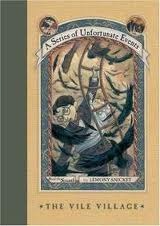
The_vile_village

Technically, it is Book the Seventh – The Vile Village, since the fourth book I have read this year is the seventh book in the Series of Unfortunate Events. I warned that there would be some brain candy. The real reason I read this is because my 11-year-old asked me to read the series, which I am doing between other books.

The things we do for our kids.

It’s Lemony Snicket, with a formulaic storyline. It’s occasionally fun. And it’s repetitive. But it’s also important to my daughter to read the series. So, here I am.

The Two Sides of a Promotion

Congratulations! You’ve just received a promotion. With it comes new responsibilities, possibly a new role, and (hopefully) a raise. Oh, and by the way, you’ve also inherited all the bad decisions, mistakes and failures to act of your predecessors. and you have to fix them now.

This is the reality of accepting the challenge.

As the leaders of the organization, it is vital that we communicate this expectation to those we promote, support them through the needed improvements and demonstrate the appropriate amount of patience through this change.

We have to get this right, if we want to be successful.

Tagged , ,

Third of 50

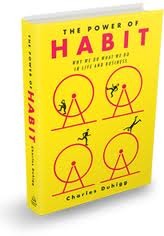
Poewr_of_habit

The third book I read this year in my quest for reading 50 books in 2013 came to me through a new acquaintance.

When I received the The Power of Habit, I knew it was gaining in popularity. My initial thought was that it was popular because executives just felt they had to read it. I did expect, though, that there would be a few anecdotes that would make reading the book worth it.

I was pleasantly surprised to learn that this was not written by some business person with something to prove and instead was written by a journalist adept at narration. the author, Charles Duhigg, did a nice job of weaving various stories together to illustrate his points.

After reading it, I must say I have a new appreciation for Starbucks (the company, not the coffee) as well as Alcoa and its one-time CEO Paul O’Neill.

I recommend reading this alongside Malcom Gladwell’s Outliers.

Tagged ,